



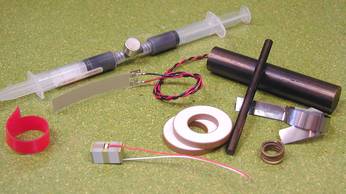
Giant dynamic strains in magnetostrictive actuators and transducers
0,00 €
Magnetostriction occurs in the most ferromagnetic materials and leads to many effects [1,2]. The most useful one to refer to is the Joule effect. It is responsible for the expansion (positive magnetostriction) or the contraction (negative) of a rod subjected to a longitudinal static magnetic field. In a given material, this magnetostrain is quadratic and occurs always in the same direction whatever is the field direction. Giant Magnetostrictive Materials (GMM), especially Rare earth-iron discovered by A.E.Clark [3], feature magnetostrains which are two orders of magnitude larger than Nickel. Among them, bulk Tb0.3Dy0.7Fe1.9, called Terfenol-D, presents the best compromise between a large magnetostrain and a low magnetic field, at room temperature.
Related products
-

Active control of vibrations of a space truss using amplified piezoelectric actuators
0,00 € Add to downloads -
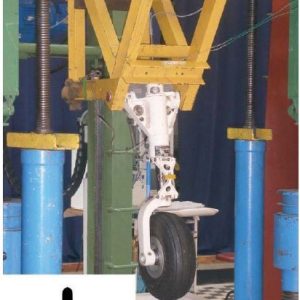
Advanced Landing Gears for Improved Impact Absorption
0,00 € Add to downloads -
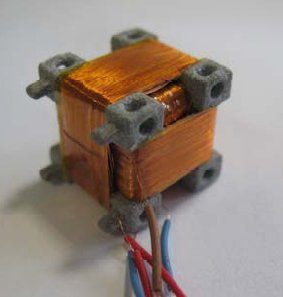
AC magnetic field detection system applied to motion tracking
0,00 € Add to downloads -
Active control of the spatial MRI phase distribution with optimal control theory
0,00 € Add to downloads