Publications

Category

  • (6)
  • (220)
    • (34)
      • (9)
    • (3)
    • (153)
      • (18)
      • (9)
      • (5)
      • (10)
      • (12)
      • (17)
      • (4)
      • (109)
      • (8)
    • (15)
      • (7)
      • (2)
      • (1)
    • (162)
      • (21)
      • (2)
      • (5)
      • (115)
      • (37)
    • (12)
      • (5)
    • (63)
      • (22)
      • (3)
      • (7)
    • (64)
      • (20)
      • (6)
      • (24)
      • (7)
    • (13)
      • (1)
      • (2)
      • (3)
      • (1)
      • (1)
    • (15)
    • (13)
      • (4)
      • (6)
  • (4)

By clicking ‘Add to download’, your selected publications are automatically grouped in the dedicated ‘My Downloads’ tab, accessible at the top right of the page.

High-resolution Rotating Piezo Motors for LISA (Laser Interferometer Space Antenna)

7 July 2026

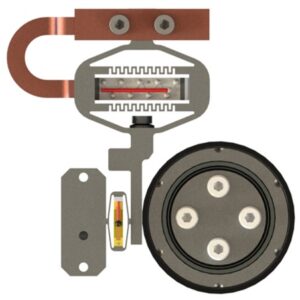
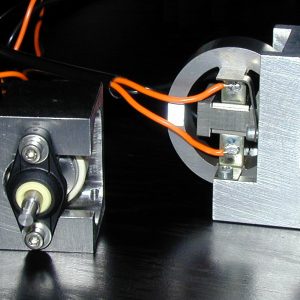
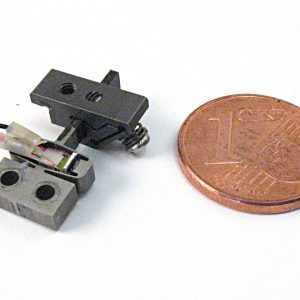
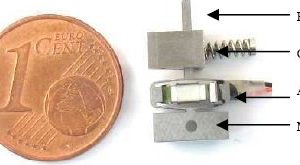
The article presents the outcomes of Technology Development Activities (TDA) of several rotating piezo motors for the LISA mission. The Laser Interferometer Space Antenna (LISA) is the European Space Agency’s (ESA) third large-class mission, aiming to become the first spaceborne gravitational wave observatory. It comprises three spacecrafts flying in a precise triangular formation, separated by 2.5 million kilometres. To ensure a stable environment for the scientific pay-load, motors must deliver ultra-low micro-vibration levels and exceptional magnetic cleanliness. Cedrat Technologies (CTEC) worked within several consortiums on 3 different motors of various sizes in different parts of the satellites. These 3 motors have a large variety of specifications, but are all compact compared to the provided torque, low-speed, non-magnetic, and will answer the environmental constraints of the LISA missions (launch, radiation, cleanliness, low micro-vibration emissivity). In this article, the development processes are described, covering the con-ceptual, preliminary, and breadboard phases. Test results are presented and discussed, along with the lessons learned, demonstrating the potential of inchworm piezoelectric motors for space applications. From these results, CTEC has been selected for the development of the flight models FM (TRL 9) of 3 types of motors. These models should consider the space environment requirement constraints (resistance to launching shocks and vibration, etc) with margins, according to ECSS norms.

Improving the reliability of piezoelectric actuators and motors subjected to significant self-heating and several billion actuation cycles or severe environments

7 July 2026

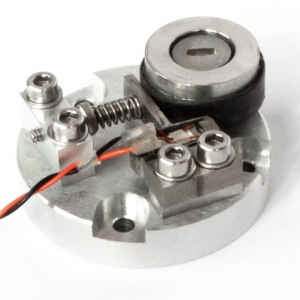
Piezoelectric actuators provide high positioning accuracy and rapid dynamic response, making them well suited for ap-plications requiring non‑magnetic behaviour, radiation compatibility, high force‑to‑volume ratio, reliable unpowered holding force, and resistance to vibrational environments. However, during high‑frequency or continuous operation, these actuators may experience significant self‑heating, particularly when operated in vacuum or elevated‑temperature envi-ronments. To address these challenges and enable reliable operation of piezo actuators in extreme conditions, the Euro-stars-funded PROOFED project was launched. It brings together Cedrat Technologies (CTEC) as project Coordinator working on the piezo motor design, CSEM for thermal modelling and thermal drain development, and CTS for the de-velopment of high temperature piezo stacks. Results include experimental validation of 10 billion of actuations at tem-perature up to 200°C, thermal drain with 41% thermal resistance reduction and new definitions of RSPA Rotary Stepping Piezo Motors offering wide operational thermal range and resistance to magnetic fields as well as vibration and shocks.
proofed motor.jpg

Inertial & Inchworm piezoelectric motors: Design and Motorization selection key aspects

14 June 2024

Piezoelectric motors have gained increasing prominence in various applications due to their unique capabilities and advantages. These motors are adapted for applications which require non-magnetic and radiation compatibility, high force/volume ratio, good unpowered stall force and low power consumption. Cedrat Technologies (CTEC) have developed inertial and inchworm motorization for a wide range of application such as Space, Defense and Nuclear. Each motorization solution has its own advantages and disadvantages which are discussed in this paper. Key aspect for the design and key element for the motorization selection are presented below.

Micromoteur et micro-actionneurs piezoélectriques de puissances

1 January 2002

The applications of piezoelectric actuators are spreading in various fields such as precise micro-positioning, shape control or vibration generation, control or damping.

Modular Test bed for Performance Assessment of Piezoelectric Stick-Slip Actuators

19 June 2023

Stepping piezoelectric actuators based on the stick-slip effect inherently make use of a friction contact between stator and rotor. This contact defines not only the actuator’s performance but also is prone to wear and tear. For broad use, the actuator has to be able to perform around 1 million strokes. To assess the actuator’s performance in terms of force, speed, mechanical output, electrical input, and long-term stability under different load- and environmental conditions, as well as different friction partners, a dedicated test-bed for a LSPA30µXS motor by Cedrat Technologies has been set up.

Module Stepping Piezoelectric Actuator: A versatil way of micro-positioning actuation

10 January 2016

Stepping Piezoelectric Actuators (SPA’s) – based on the Piezoelectric Friction-Inertial Actuation (PFIA) principle – are made from Cedrat Technologies Amplified Piezoelectric Actuators (APA). They use the stickslip principle to couple high resolution positioning (cm) and low volume (10cm), allowing easier multi-DoF mechanism developments and miniaturization possibilities – is presented. Results obtained on three innovative engineering models – linear long stroke, rotary and three-DoF actuators – are presented, giving the reader actual benefits of this concept and allow addressing new applications such as consumer goods and medical devices.