Publications
Categories
- (34)
- (9)
- (3)
- (145)
- (18)
- (7)
- (5)
- (8)
- (9)
- (17)
- (2)
- (104)
- (7)
- (15)
- (7)
- (2)
- (1)
- (6)
- (155)
- (20)
- (2)
- (5)
- (111)
- (35)
- (11)
- (4)
- (59)
- (18)
- (3)
- (7)
- (62)
- (18)
- (5)
- (24)
- (7)
- (12)
- (1)
- (2)
- (2)
- (1)
- (1)
- (14)
- (13)
- (4)
- (6)
Design and evaluation of a piezo xy stage
19 June 2023
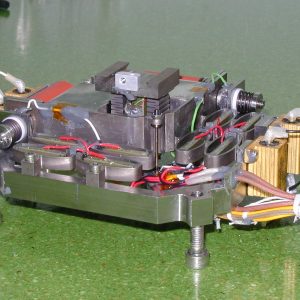
The ROSETTA/MIDAS mission of the Europeans Space Agency (ESA) intends to study the dust collected from the Wirtanen comet using an Atomic Force Microscope (AFM). This instrument utilzes an XY piezoelectric stage to achieve precise positioning in two in-plane orthogonal directions, and a Z actuator to support the needles for the analyses of dust particles in the out-of-plane direction.
From the Test Benches to the First Prototype of the muFly Micro Helicopter
19 June 2023
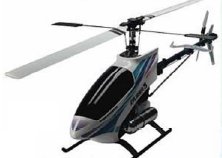
The goal of the European project muFly is to build a fully autonomous micro helicopter, which is comparable to a small bird in size and mass. The rigorous size and mass constraints infer various problems related to energy efficiency, flight stability and overall system design. In this research, aerodynamics and flight dynamics are investigated experimentally to gather information for the design of the helicopter’s propulsion group and steering system. Several test benches are designed and built for these investigations
Design and tests of a demonstrator for filet compensation mechanism
5 January 2016
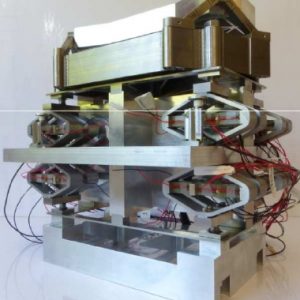
Future matrix sensors will acquire an area on ground and are then susceptible to image shift due to satellite movement during acquisition. Design, Build and Test a breadboard mechanism that could shift telescope line of sight and freeze observed area during image acquisition.
Design of a 2 stages compressor for mobility applications, using compact and efficient Moving Iron Controllable Actuators
19 June 2023
An actuator is rescaled for integration into a compressor used for the liquefaction of hydrogen vapor boil off, into a propellant storage system. The goal is to evaluate the feasibility of liquid hydrogen zero boil off, for long duration storage at 20 Kelvin cryogenic liquid condition. This article presents the actuator trade off, selection and special features imposed by the application. The actuator design is presented, its characteristics are measured, and resulting performances are presented and discussed.
FSPA and BSMA Nanometric positioning actuators for ground and space applications
19 June 2023
Many applications and more specifically space projects show need for a stable sub-micrometre positioning actuator. In order to meet this need, Cedrat Technologies has designed the new FSPA brand. This linear stepping actuator offers sub-micrometric positioning resolution along 5mm stroke combined with high actuation force (>100N) and the ability to hold its position without power.
The IASI-NG instrument is one of the key payload on-board METOP-SG which is a new meteorological satellite for Europe. The instrument is based on a Mertz interferometer and requires a very precise positioning of an optical blade used to separate the interferometer’s branches. A dedicated version of the FSPA, the Beam Splitter Mechanisms Actuator (BSMA) is then developed to achieve this nanometric positioning which is a key parameter for the overall instrument performance.
This paper firsts present the internals of both FSPA and BSMA actuators. Major design differences and their respective impact on the resulting performances are detailed. Results from the acceptance and qualification test campaigns are also presented.
Design of a dynamic tribometer applied to piezo inertia drive motors
7 November 2019
In Inertia Drive Motors, generated motion is based on stick-slip principle. Current analytical models are predictive enough to calculate qualitatively their optimal performances, such as maximal step size and speed, with relatively few input parameters. Butn they do not take into account the contact life and temporal evolution of parameters as friction factor all along lifetime of IDM. So analytical models reach their limitswhen precise predictions are necessary.